
What to Do with Dead Plants and How to Reuse Them Wisely
As someone who’s spent years working with creative businesses, home styling, and eco-friendly living, I’ve learnt one truth over and over again: even the most beautiful flowers have an expiration date. Whether you’re a florist managing buckets of wilted stems after an event or a home hobbyist staring at a sad plant in a pot, the question pops up every time…
What do you actually do with dead plants?
In the floral industry, especially for professionals using express-fresh suppliers like Petaljet, dealing with organic waste isn’t just housekeeping. It’s part of maintaining workflow, creativity, and environmental responsibility. And the good news? With a little awareness, dead plants can be handled wisely — and even reused.
Let’s break down the best ways to manage, sort, and responsibly recycle floral waste like a pro.

The Professional Clean-Up: Beyond the dead plant in pot
For a florist, the question of what to do with dead plants is different from the question of what to do with dead plants for the average gardener. It’s not just about one dead plant in a pot, but about pounds of organic material after a big event or a week of work. Efficient disposal is part of the business model.
When it comes time to remove the dead plants and wilted bouquets, the first step is sorting. Floral foam, wire, ribbons, and plastic wrap should be separated from organics. This process determines how “green” your studio is. Knowing how to dispose of dead flowers properly is a true professional.
The Big Question: can you compost dead flowers?
The short answer is: yes, and it’s the best thing you can do with them! Turning waste into compost is a perfect example of nature’s recycle. It literally returns nutrients back to the soil.
However, there are nuances. Not everything that was a flower can go into compost. Here is a simple list for sorting in the florist studio:
Can and should be composted:
- Stems, leaves and petals
- Branches (if shredded)
- Unpainted wooden elements
- Soil from old pots
Cannot be composted (must be disposed of separately):
- Floral foam (oasis) – it does not decompose
- Plastic packaging, ribbons, wire
- Flowers heavily treated with glitter or paint
- Diseased plants (they can contaminate the compost)
If you do not have your own compost pit, it is worth finding out about municipal “green waste” collection programs. This is much better than sending organics to a general landfill.

The Cycle of Renewal: Making Space for Freshness
The process of recycling is not just cleaning. It is an act of renewal. When a florist clears their workspace, they make room-physically and creatively-for new ideas and new flowers. This is the logical end of the life cycle.
And when the tables are clean, the buckets are empty, and the orders are waiting, it’s time for replacement. This is when professionals come to Petaljet to buy flowers in bulk. They know they’ll get the freshest material to bring their ideas to life.

Before You Go
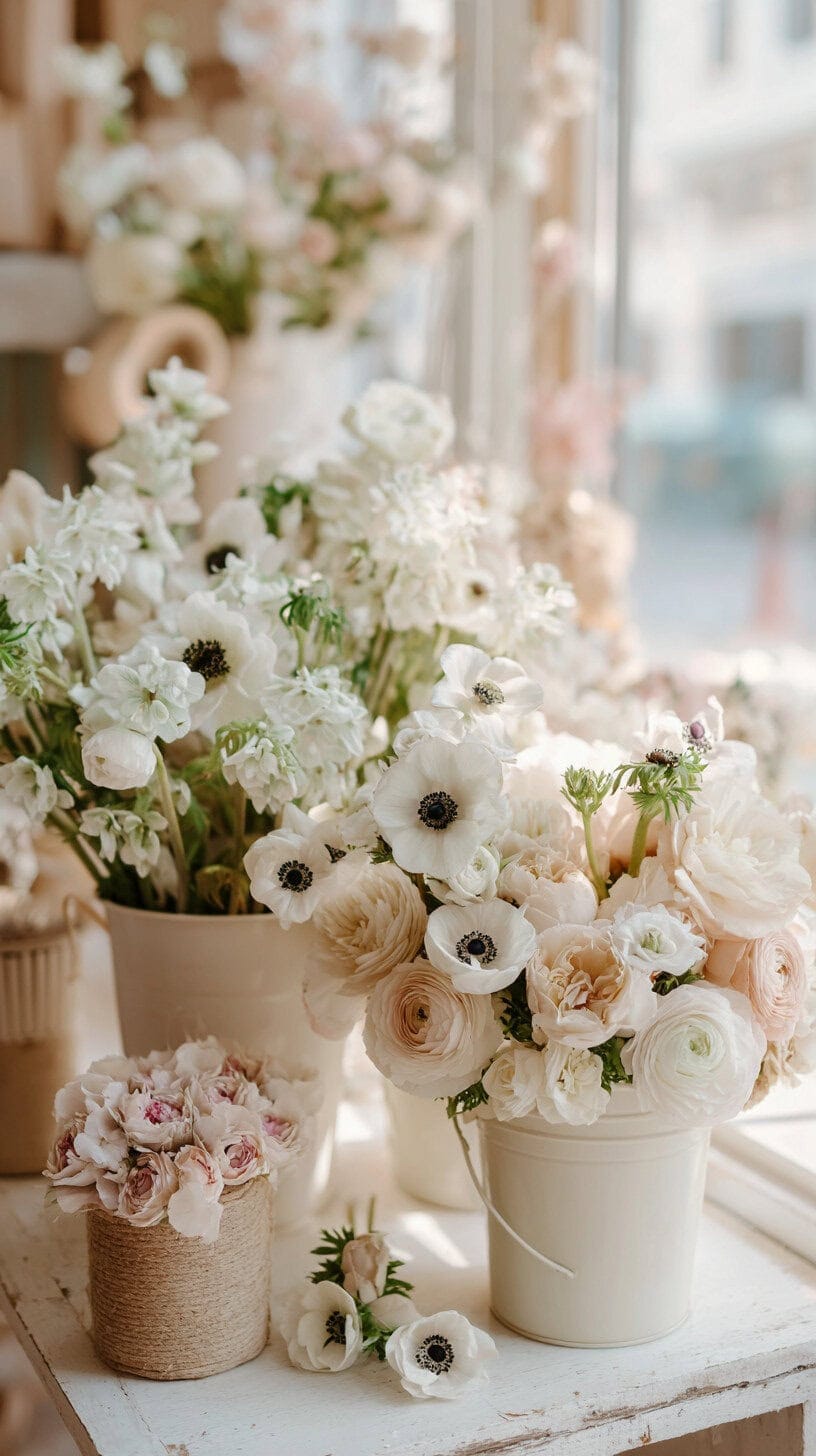
Every flower has a life cycle, and clearing out the old is simply part of honouring that process. Whether you compost your stems, recycle what you can, or a fresh box full of perfect white anemone arriving in place of the old stems is the true rhythm of a florist’s work, the goal is the same. Making room for beauty to return.
If you found this helpful, keep exploring for more calm, simple, and practical floral wisdom.
With love, gratitude & soft girl CEO vibes.